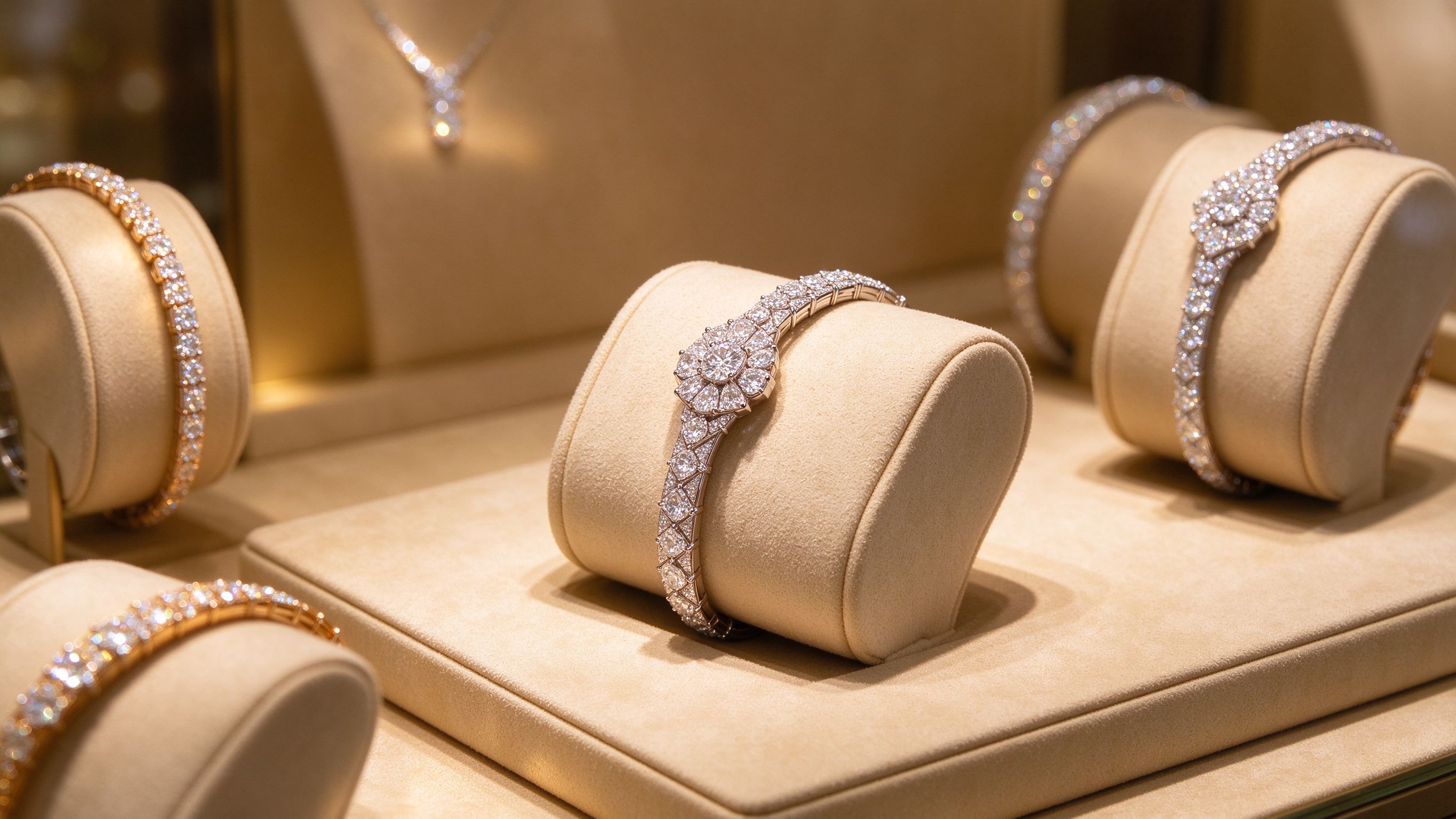
A tennis bracelet is a line of stones set along a flexible chain. The way those stones are held decides whether the bracelet stays sparkling or starts losing stones within months. Prong and channel settings are the two main approaches, and they suit different buyers.
Prong-set tennis bracelets
Each stone is held by small prongs. This lets light enter from all sides, maximizing sparkle. It is the classic tennis bracelet look. The trade-off is that prongs can catch on fabrics and bend, and loose prongs mean lost stones. Prong bracelets need occasional checks to tighten the claws.
Channel-set tennis bracelets
Stones sit in a continuous metal channel between two rails. No prongs protrude, so the bracelet lies flat and smooth against the wrist. It is more durable and less likely to snag. The trade-off is slightly less sparkle because the sides of the stones are covered. Channel sets suit active wearers.
Flexibility and comfort
A tennis bracelet must bend with the wrist. Good ones have flexible links that move smoothly. Stiff bracelets twist around and dig in. When buying wholesale, flex a sample: it should articulate easily without gaps. The clasp should be a box clasp with figure-eight safety, not a simple lobster, because a tennis bracelet that opens falls off the wrist easily.
Cleaning and maintenance
Prong settings trap lotion and soap under the stones and need regular brushing. Channel settings are easier to wipe clean but can hide dirt in the channel. Either way, an annual check to tighten prongs and test the clasp prevents losses.
Which to stock
- Gift and dress occasions: prong set, maximum sparkle.
- Everyday and active customers: channel set, durable.
- Budget tier: prong with smaller stones is cheaper to make.
FAQ
Why do tennis bracelets lose stones?
Loose prongs or a failed clasp. Regular tightening prevents most losses.
Are channel-set bracelets less sparkly?
Slightly, because the metal rails cover the sides of the stones.
What clasp should a tennis bracelet have?
A box clasp with a safety latch, which resists opening when bumped.
Setting durability protects the investment. See Bracelets Value and knowledge.
The clasp is the weak point
A tennis bracelet loses far more bracelets through a failed clasp than through lost stones. A simple lobster clasp on a flexible bracelet can open when the wrist turns, and the bracelet slides off unnoticed. A quality tennis bracelet uses a box clasp with a figure-eight safety latch that holds even if the main clasp opens. When you buy or sell tennis bracelets, inspect the clasp. If it lacks a safety, upgrade it or avoid it. The clasp is what keeps the bracelet on the wrist.
The bracelet should also flex smoothly. A stiff bracelet digs into the wrist and twists. Flex it by hand; it should move like a snake. If it resists, the links are poorly made. A good tennis bracelet follows the wrist instead of fighting it.
Resizing a tennis bracelet
Tennis bracelets are sized to the wrist, and getting the fit right matters. Too tight and it pinches; too loose and it slides around and catches. Measure the wrist snugly, and allow a finger of movement. If a bracelet is slightly too big, a jeweler can remove a link. If it is too small, adding links is harder and may not match. Size it correctly the first time. Annual checks of prongs and clasp keep it on the wrist and sparkling.
Bottom line
Prong-set tennis bracelets sparkle more; channel-set ones survive more. Choose prong for dress occasions and channel for active wear. Most importantly, demand a box clasp with a safety latch, because clasp failure loses more bracelets than loose stones. Flex the bracelet and check the clasp annually to keep it on the wrist.
A worked example: a bracelet that slid off
A woman reached for a bag and her tennis bracelet slipped off her wrist. The simple clasp had opened when her wrist turned. A box clasp with a figure-eight safety would have held. Since then she wears only bracelets with safety latches. The lesson is that the clasp is what keeps a tennis bracelet on. No matter how beautiful the stones, a bracelet that falls off is a disaster. Always check for a safety latch, and test that the bracelet flexes smoothly around the wrist.
Choosing prong vs channel for life
Prong settings sparkle more and suit dressy, occasional wear. Channel settings lie flat and survive an active wrist. If the bracelet is for evenings, prong. If it is for daily office wear, channel. Either way, size it snugly so it does not slide around, and have prongs checked once a year. A well-chosen tennis bracelet stays sparkling and on the wrist for years.
Quick reference checklist
- Always choose a box clasp with a safety latch.
- Prong settings sparkle more; channel settings survive more.
- Size it snugly so it does not slide around.
- Flex the bracelet to check smooth articulation.
- Have prongs checked once a year.
A tennis bracelet is only as good as its clasp. Demand a safety latch, choose prong or channel by lifestyle, and size it to the wrist. Check the clasp and prongs annually, and the bracelet stays sparkling and on the wrist for years of everyday wear.
The clasp and setting decide whether a tennis bracelet stays on and stays sparkling. Demand a safety latch, choose the setting for the wrist, and check it yearly. Treated well, it becomes a piece worn and loved for years.
Size a tennis bracelet so it slides just a finger's width. Too loose and it twists; too tight and it pinches. The right fit, plus a safety clasp, means the bracelet stays on and sparkling through daily wear.
Have a jeweler check the clasp and prongs once a year. It takes minutes and catches wear early. A tennis bracelet that is checked annually stays secure and sparkling, and never becomes a lost piece.
Choose a tennis bracelet that flexes with the wrist rather than fighting it. A well-made one moves smoothly and sits evenly, which makes it comfortable enough to wear every day. The combination of secure clasp, smooth flex and even stones is what makes a tennis bracelet a piece people reach for again and again.