01Why returns start after delivery, not before
Most buyers think the risk in lab grown diamond wholesale sits in the grading report or the price per carat. From where I stand on the QC bench, the expensive problems show up four to ten weeks after the parcel lands. A prong tips over on a thin band, a melee stone goes cloudy from hand lotion, a tennis bracelet clasp loosens, and the buyer eats the return plus the reship. That is the loop I want to talk about.
We run a care, cleaning and repair loop inside the factory because it protects both sides. It is not a warranty gimmick. It is a set of inspection gates and simple instructions that keep finished jewelry wearable long enough that nobody needs to argue about fault.
02What actually fails on a wholesale order
Pulled from our own return logs over the last three years, the failures cluster hard. Stone loss and prong wear lead. Surface haze from cleaning mistakes comes second. Clasp and hinge failure on bracelets is third. Very little of it is a bad crystal.
- Prong tips thinned below 0.25 mm on 1.0 mm melee settings, opening under daily wear
- Rhodium wear on the underside of rings, where buyers never look until a customer complains
- Ultrasonic cleaning with ammonia-based solution on silver, dulling the finish in weeks
- Bracelet clasps with no tension check before packing, loosening after 30 days
- Loose stones from a setting seat that was never re-tightened after polishing
Notice that four of five are process issues, not material issues. That is good news, because process is controllable.
Pulled from our own return logs over the last three years, the failures cluster hard. Stone loss and prong wear lead. Surface haze from cleaning mistakes comes second. Clasp and hinge failure on bracelets is third. Very little of it is a bad crystal.
03The three-gate loop we run before anything ships
Gate one: incoming stone check
Every parcel of lab grown diamonds gets screened on arrival. We verify carat weight on a calibrated scale, check color and clarity against the order sheet under 10x, and run a tester pass to confirm the stones are lab grown and not treated. Melee lots get a sampling plan, not a glance. If a lot drifts, it stops there and the supplier hears from us the same day.
Gate two: in-process setting and polishing checks
The setter signs off on prong height and tip thickness before the piece goes to polish. Polishing then gets its own check, because a polishing wheel can round a prong tip in seconds. This is where most factories save time and where most returns are born. We do not skip it.
Gate three: pre-ship AQL
Before packing, we run an AQL sampling inspection on the finished lot. Stones get a tap test for movement, clasps get a tension test, and the finish gets a visual under daylight-balanced light. Anything that fails goes back to the bench, not into the box. Certificates are matched to the piece at this stage, so a GRA or IGI document never travels with the wrong item.
04Certificates and paperwork that survive a return
For lab grown diamond wholesale, the paperwork is part of the product. We issue GRA certificates as standard on melee and smaller goods, and IGI for the larger single stones where a buyer needs an independent lab. Every certificate number is logged against the SKU, so if a customer questions a stone, the buyer can pull the record in seconds.
We keep the same discipline on the commercial side: T/T 30% deposit to start production, PayPal accepted for sample orders, and DDP delivery landing in 5 to 8 days to most US and EU addresses. Production runs 12 to 18 days on custom work. Stock items ship from one piece, custom MOQ is 30 pieces. That structure exists so a buyer can test a design with a sample before committing to a full run.
05Cleaning instructions your customer will actually follow
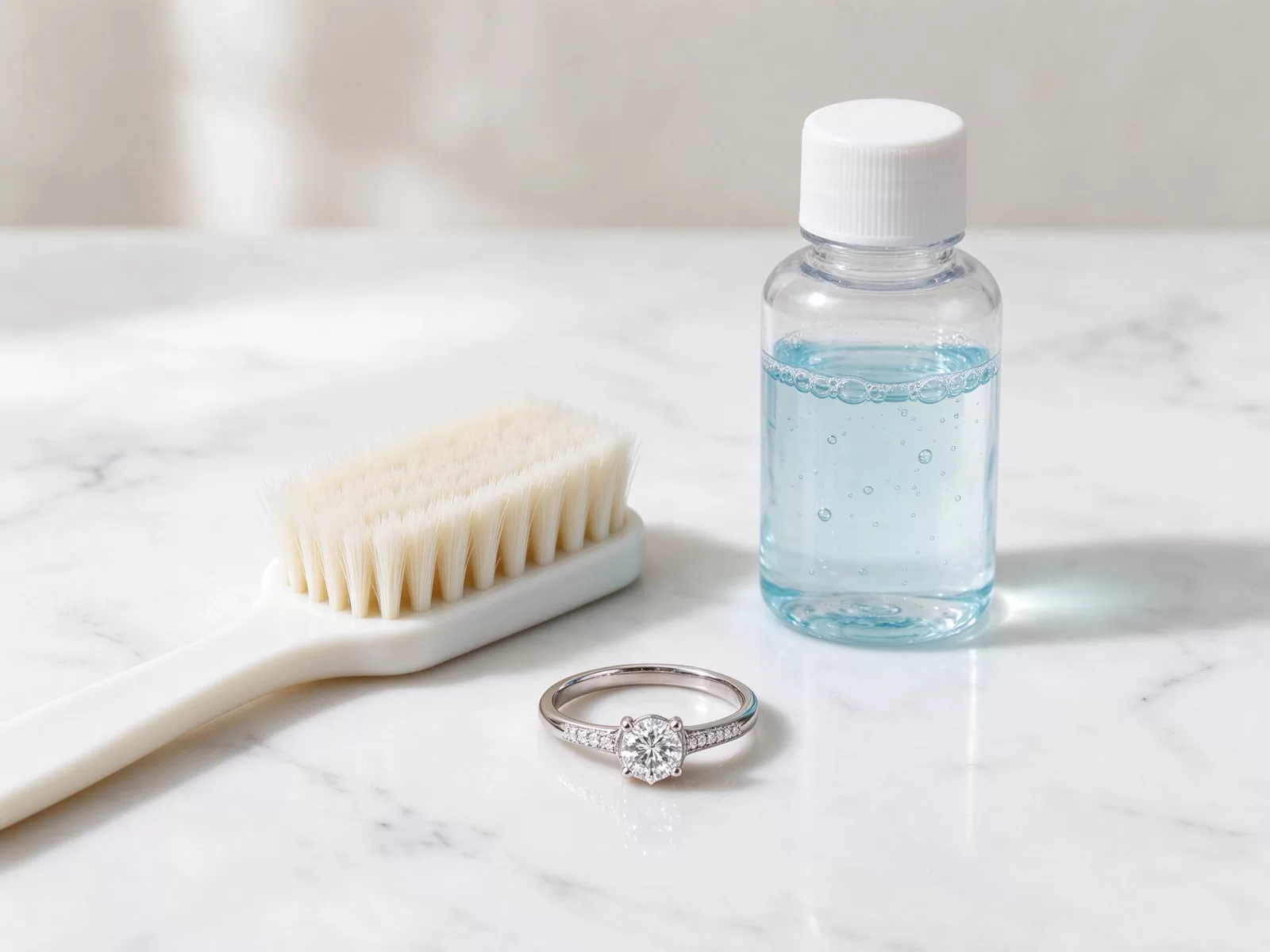
Most haze complaints trace back to cleaning, so we ship a short card with every order and keep the text blunt. Warm water, a drop of mild dish soap, a soft brush, pat dry. No ammonia, no chlorine, no ultrasonic on silver, no steam on filled or treated goods.
| Item type | Safe cleaning | Avoid | Check interval |
|---|---|---|---|
| Lab grown diamond solitaire | Warm soapy water, soft brush | Chlorine, abrasive paste | Prong check every 6 months |
| Melee pavé band | Soak, gentle brush, pat dry | Ultrasonic at high power | Stone tap test every 3 months |
| 925 silver piece | Silver cloth, mild soap | Ammonia, bleach, hot water | Rhodium review yearly |
| Tennis bracelet | Soft brush, clasp tension check | Pulling clasp to test | Clasp check every 4 months |
That table is not marketing. It is the same list our bench uses when a repair comes back in, and it is the reason we can tell a genuine defect from wear.
If a buyer cannot explain to their customer how to clean a piece, they will see it again as a return. The care card costs us cents and saves both sides a shipping cycle.
06The repair loop and why it is cheaper than a return
When a piece does come back, we want it on the bench, not in a claim file. A retipped prong and a re-tightened stone take minutes. A return and reship takes two weeks and a lot of goodwill. So we treat repairs as a routing question: what failed, which gate should have caught it, and what changes in the process sheet.
- Stone loss: check prong tip thickness and setting seat in the process photo log
- Clasp failure: pull the tension test record for that batch
- Finish haze: confirm the cleaning card shipped and the solution used
- Certificate mismatch: trace the certificate log against the SKU
- Repeat issue on one SKU: retire the design or change the setting spec
Because we cut, set and finish in-house rather than buying finished goods from a trading company, our cost, speed and yield run about 20% better than typical traders. The reason is simple: no middle layer marking up, no waiting on someone else's bench schedule, and no lost day when a question needs an answer. A repair decision gets made the same shift it arrives.
07What a buyer should ask before placing a wholesale order
Ask any supplier three things. What is your pre-ship inspection standard, and can I see the AQL record? Who checks prong thickness after polish? What happens when a stone falls out in month two? The answers separate a factory from a reseller quickly.
We keep our answers on paper and we are happy to walk a buyer through the QC sheet on a call. Reach the team on WhatsApp at +86 133 7744 7107 or by email at service@holycome.com.
08Frequently Asked Questions
What is the MOQ for lab grown diamond wholesale orders?
Stock designs start at one piece so buyers can test a style. Custom designs carry a 30 piece minimum per SKU, which covers the setup time on the setting and finishing line.
How long does production take, and how is price quoted?
Custom production runs 12 to 18 days after the 30% T/T deposit clears, with DDP delivery in 5 to 8 days to most US and EU addresses. Pricing is quoted per piece based on stone grade, metal weight and setting complexity, with certificates included.
Do you handle repairs on pieces that come back from customers?
Yes. Retipping, stone replacement and clasp repair are routine bench work for us, and we log each case against the original production batch. Sample orders can be paid by PayPal, and repair quotes follow the same per piece basis as new work.
If you want the care card, the QC sheet and a sample quote in one reply, send your target styles and quantities to service@holycome.com or message +86 133 7744 7107 on WhatsApp and we will put a sample set together for your review.