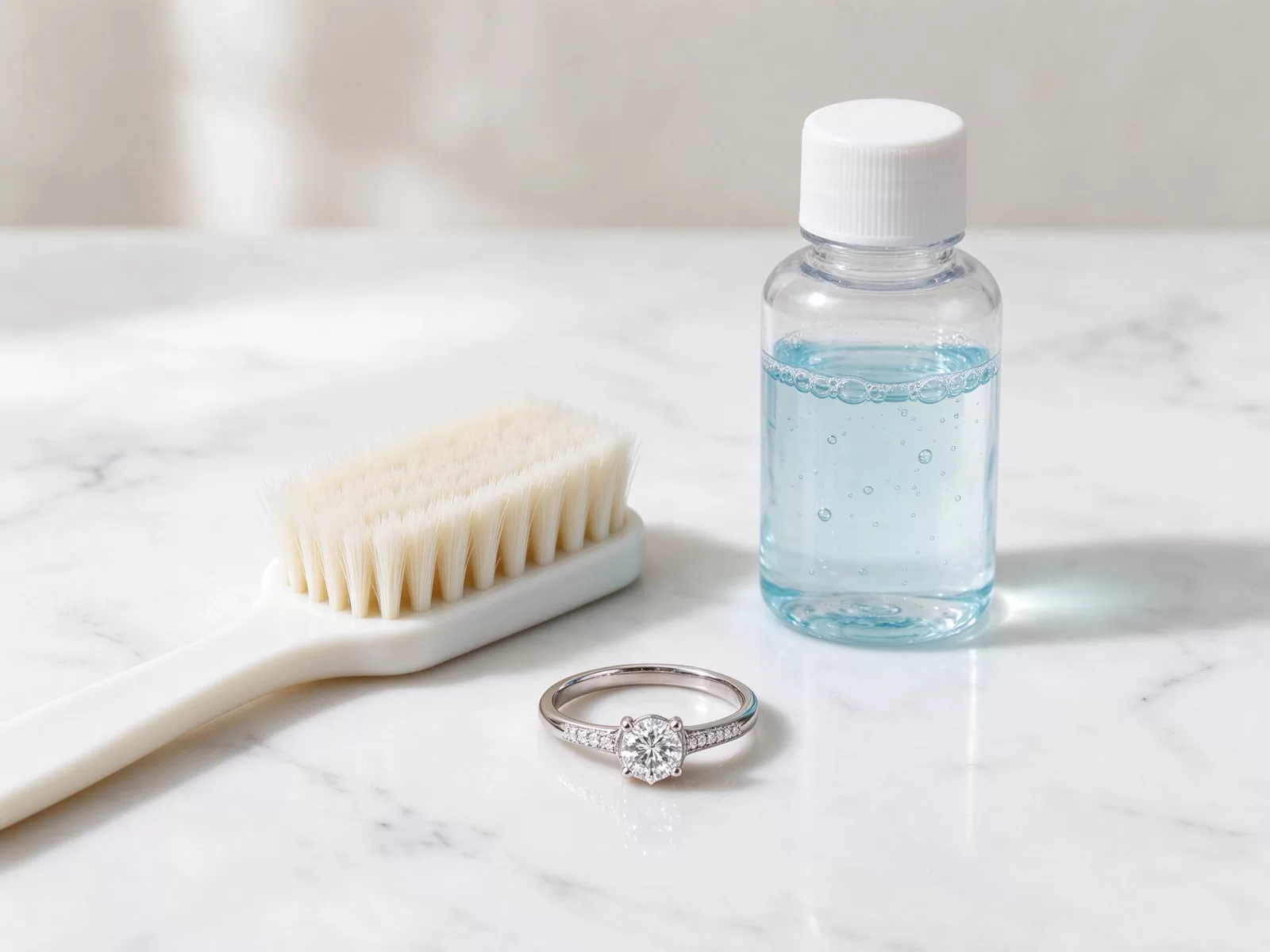
Stone language moves faster than stone quality. 'D color', 'excellent cut', 'VVS' are grading terms with defined meanings, and using them loosely on Jewelry Care is how a listing overstates.
01Color and clarity, in plain terms
Color grades run from D, colorless, down the alphabet as tint increases. Clarity grades run from flawless to included, and the visible difference on Jewelry Care usually appears around VS to SI.
On a 6 mm stone, an SI inclusion can be invisible to the eye. On a 9 mm stone, the same grade can be visible. Size changes what a grade means.
Put the gram weight per size on the PO, not an average. Cost and feel both follow weight, and an average hides the size that breaks the margin.
02Cut: the variable that decides sparkle
Cut is about proportion, symmetry and polish. A well cut stone returns light; a deep or shallow stone leaks it. This is why two stones of the same color and clarity can look different.
On Jewelry Care, cut is the grade most worth paying for and the one most often left unstated.
| Term | Range | Visible effect | Price effect |
|---|---|---|---|
| Color | D to K | Tint at the edges | Large |
| Clarity | FL to I | Inclusions at size | Large |
| Cut | Excellent to fair | Sparkle and life | Large |
| Shape | Round to fancy | Setting and look | Moderate |
Read the table as a checklist rather than a recommendation. The right row depends on the price band, the wear pattern and the channel you sell into.
Build the landing date from ship date plus transit plus clearance. Planning from the ship date alone makes every season a week late.
Cut is about proportion, symmetry and polish. A well cut stone returns light; a deep or shallow stone leaks it. This is why two stones of the same color and clarity can look different.
03Shape and setting
Round, oval, pear, emerald and cushion each need a different seat and prong layout. A setting built for a round stone will not hold a pear cleanly.
Match the setting to the shape in the spec, and photograph the seat.
04Writing a stone specification
Six fields: type, shape, size in millimetres, color grade, clarity grade and cut. Add the certificate number where one exists.
That is the difference between a Jewelry Care listing that survives a question and one that does not.
The cheapest correction happens at the sample. A seat that is 0.2 mm shallow costs a CAD revision at one piece and a rework bill at five hundred.
05What to check before the order
Run the five checks below in order. The first two protect the money, the last three protect the launch date.
- State color and clarity as grades, not adjectives.
- State the cut, which is the sparkle variable.
- Match setting to stone shape.
- Record size in millimetres.
- Add the certificate number where it exists.
If a supplier cannot answer three of the five, treat the quote as a starting point rather than a plan. Ask again in writing and keep the answer with the PO.
06Frequently Asked Questions
What stone grades matter for Jewelry Care?
Cut first, then color, then clarity. Cut decides how the stone looks; color and clarity decide how clean it looks at size.
Is SI clarity good enough?
Often yes at small sizes. At larger sizes the inclusion can become visible, so the grade has to be matched to the size.
Why do two stones of the same grade look different?
Cut and proportion. A deep stone leaks light even at a good color grade.
Does shape affect the setting cost?
Yes. Fancy shapes need a matched seat and more bench time than a round.
How do I specify a stone so the lot matches?
Six fields plus a reference photo of the approved stone next to a ruler.
How do I know a supplier is reliable?
Two clean repeat lots and two on-time shipments. Before that it is a sample, not a supplier.
Send the Jewelry Care stone requirement. We return a six-field specification with a reference photo protocol for every lot. See the full range at HOLYCOME.
The short version: specify the number, seal the sample, inspect against both. Everything else is negotiation.