Bracelet Metal Finish for Skin Tone: Rose, Gold or Silver
A customer tries on two bracelets: one in cool silver, one in warm gold. The silver makes her skin look pale and washed out. The gold makes her glow. She has no idea why, but she feels the difference immediately. This is the effect of metal finish on skin tone, and it is one of the most personal choices in jewelry. The same bracelet in the wrong metal can look dull on someone's wrist, and in the right metal it can make her whole arm look brighter. The good news is that the choice is not mysterious. Skin tones lean cool or warm, and certain metal finishes flatter each one. We make bracelets in Hengang, Longgang, Shenzhen, in silver, gold, and rose finishes, so every customer can find the metal that suits her. This guide explains how to match a bracelet metal to a skin tone, which finishes flatter which complexions, and how to sell the right metal to every wrist.
The reason this matters is that the metal sits directly against the skin, and it reflects onto it. A cool silver bracelet reflects a cool tone onto the wrist. A warm gold bracelet reflects a warm tone. When that reflected tone matches the skin's undertone, the skin looks alive. When it clashes, the skin looks sallow or washed out. This is why two people can wear the same bracelet and look completely different in it. The bracelet has not changed. The skin undertone has. We discuss the broader bracelet range in our article on bracelets, and the metal finish is the personal layer on top.
Commercially, knowing skin tones lets you sell the right piece the first time. A customer who buys a silver bracelet that clashes with her warm skin may feel it looks dull and stop wearing it. A customer who buys the gold that suits her warm skin loves it and wears it daily. The right metal finish increases wear and repeat purchases. When you help a customer find the metal that suits her, she becomes a customer who buys that finish again and again. We discuss the repeat purchase in our article on bracelet margins, where the right finish builds loyalty.
Cool vs Warm Undertones
The first step is understanding undertone, which is not the same as skin color. Skin can be fair, medium, or dark, and within each there is a cool or warm undertone. A cool undertone has pink or blue hints. A warm undertone has yellow or golden hints. A neutral undertone sits in the middle. The simplest way to tell is to look at the veins on the inside of the wrist. If they look blue or purple, the undertone is usually cool. If they look green, it is usually warm. Another test: silver jewelry looks better on a cool undertone, gold on a warm one. If you look good in both, you are likely neutral. We explain this to our retail partners, because it is the first question to ask. You can read about the undertone test in our article on skin tones.
Cool undertones are flattered by silver, white gold, and rhodium-plated finishes. The cool metal harmonizes with the pink and blue undertones, and the skin looks bright. Warm undertones are flattered by yellow gold, rose gold, and warm bronze finishes. The warm metal harmonizes with the golden undertones, and the skin glows. Neutral undertones can wear both, which is why they are the lucky ones who look good in any metal. Rose gold is a special case, because it has a warm pink tone that suits many warm and neutral undertones, and it is one of the most popular bracelet finishes. We stock all three, so every undertone has a match. You can read about the finishes in our article on metal finishes.
There is a trend layer on top of the undertone. Even if a cool undertone technically suits silver, she might want a gold bracelet because gold is trendy. The undertone is a guide, not a rule. Many customers mix metals, wearing silver and gold together, which is a modern look. We support this by selling bracelets in all three finishes, so a customer can build a mixed-metal stack. The old rule that you must wear one metal is gone. Today, mixing silver and gold on one wrist is a deliberate style. We discuss the mixed-metal trend in our article on mixed metals, where the customer chooses by style as much as by tone.
Which Finish Fl Which Complexion
Let us lay out the matches. A cool, fair skin with pink undertones looks brightest in silver or white rhodium. The cool metal lifts the skin and prevents it looking washed out. Yellow gold on a cool fair skin can look a little dull, because the warm metal clashes with the pink undertone. A warm, medium skin with golden undertones glows in yellow gold and rose gold. The warm metal brings out the golden skin. Silver on a warm medium skin can look a little stark, because the cool metal contrasts too much. A deep skin tone carries both silver and gold beautifully, because the deep skin makes either metal pop. Many customers with deep skin can wear any finish, and they choose by style. We discuss the range in our article on skin and metal.
Rose gold is the most forgiving finish. Its warm pink tone flatters warm and neutral undertones, and it has a softness that suits many skin tones. This is why rose gold bracelets are so popular: they look good on almost everyone. A customer who is unsure which finish suits her can start with rose gold, and it will usually flatter. Silver is the cool, bright choice. Yellow gold is the warm, rich choice. Rose gold is the soft, middle choice. We stock all three, and we recommend rose gold to the undecided customer. You can read about rose gold in our article on rose finish, where its versatility is the selling point.
The finish also changes the mood of the bracelet. Silver reads as modern, clean, and cool. Gold reads as classic, warm, and dressed up. Rose gold reads as feminine, soft, and trendy. A customer who wants a modern everyday bracelet chooses silver. A customer who wants a classic piece chooses gold. A customer who wants a soft, feminine look chooses rose. The finish is not only about skin tone. It is also about the mood the customer wants. We help her choose by asking both: which undertone, and which mood. You can read about the mood in our article on finish mood, where the silver, gold, and rose each send a different message.
| Undertone | Best Finish | Avoid |
|---|---|---|
| Cool, pink | Silver, white rhodium | Warm yellow gold |
| Warm, golden | Yellow gold, rose gold | Cool silver |
| Neutral | Any, especially rose | None |
| Deep skin | Both silver and gold | None |
Selling the Right Finish to Every Wrist
The easiest way to sell the right finish is to let the customer try them on side by side. Have silver, gold, and rose bracelets ready, and let her hold each one against her wrist. The right finish is obvious when she sees them together. The silver may brighten her, the gold may warm her, and she will know which one she wants. This side-by-side try-on is the fastest way to match the finish, because the eye sees the difference immediately. We give our retail partners all three finishes in their best-selling styles, so they can let the customer choose. You can read about the try-on in our article on finish try-on, where the wrist decides.
If the customer is shopping online, use photos of each finish on different skin tones. A silver bracelet on a cool skin, a gold bracelet on a warm skin, and a rose on a neutral. The customer can then see which finish looks like her skin. This prevents the online return of a finish that clashes. We send our partners finish photos on multiple skin tones, because we want the online buyer to choose the right metal the first time. You can read about the online photos in our article on online finish, where the skin-tone photo prevents the return.
Remember that many customers already have a jewelry finish preference. She may already wear a silver watch and silver earrings, and she wants a bracelet to match. Ask what metal she already wears, and match it. A customer who wears silver daily will want a silver bracelet to coordinate. A customer who wears gold daily will want gold. The existing jewelry is the strongest guide, because she has already chosen a metal she likes. We train our partners to ask what she wears, because the matching finish is the one she will actually coordinate with her wardrobe. You can read about the coordination in our article on matching finishes, where the existing jewelry is the clue.
Plating and How Long the Finish Lasts
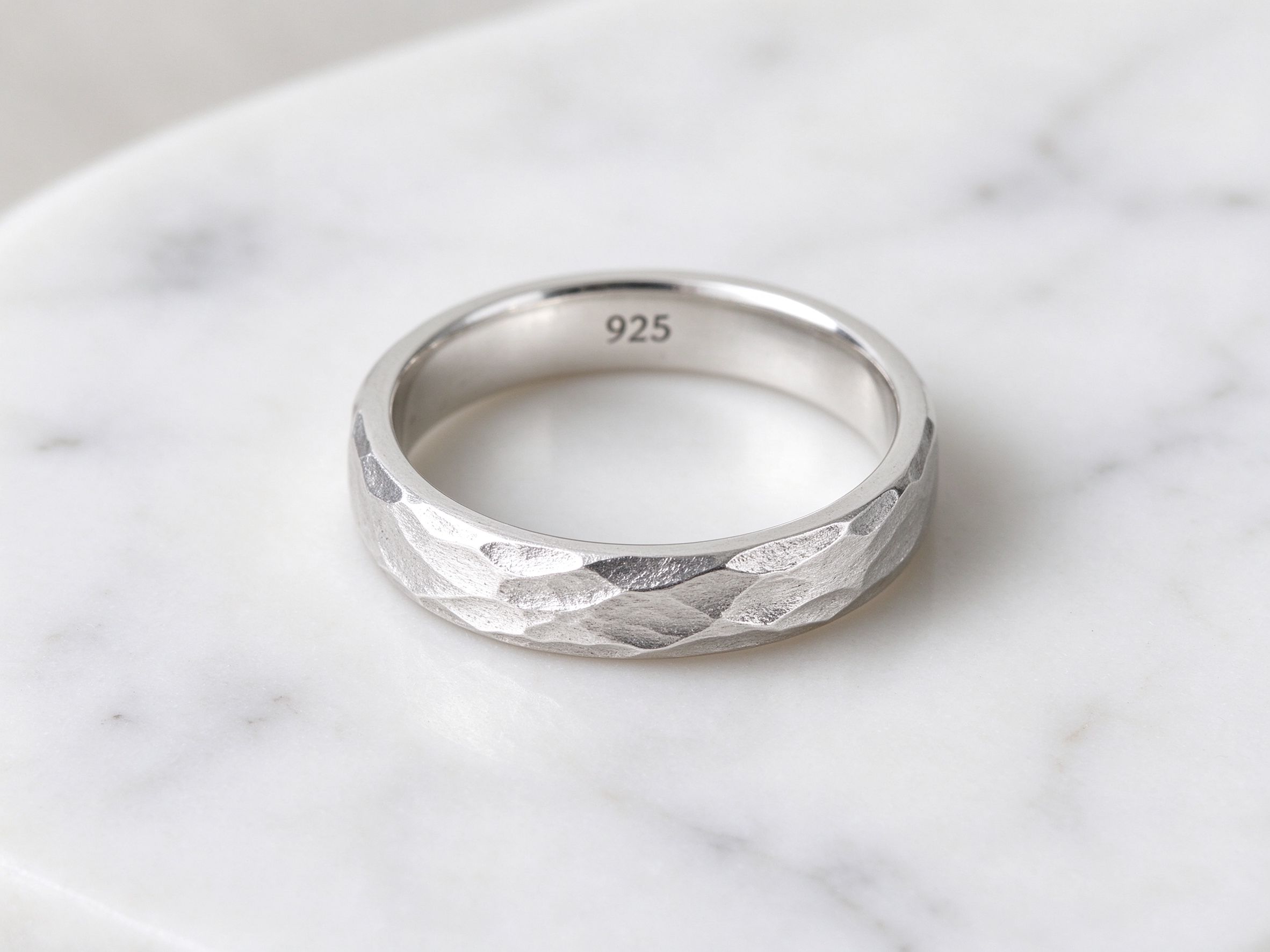
The finish on a 925 silver bracelet is usually a plating: rhodium for silver-white, gold vermeil for warm gold, rose plating for rose. The plating gives the color, and the 925 silver gives the base. The plating wears over time, especially on a bracelet that rubs against desks and sleeves. A well-plated bracelet keeps its finish for years with normal wear. A thin plating wears off in months, revealing the silver underneath. We use a durable plating on our bracelets, so the finish lasts. You can read about plating in our article on plating, where the thickness controls the finish life.
When the plating wears, the bracelet can be replated cheaply. This is why a 925 silver bracelet in any finish is a long-term piece: when the gold plating wears, you replate it back to gold. The base silver is the same. This means a customer can even change the finish over time, replating a silver bracelet into a gold one if her style changes. We mention replating as a service, because it extends the life of the piece. You can read about replating in our article on replating, where the finish is renewable.
The finish also changes how the bracelet needs care. A polished plating shows scratches more than a matte finish. A rose plating can fade faster than a rhodium plating, because the rose color is thinner. We tell our customers the care for each finish, so they know how to keep it bright. A customer who knows her rose plating needs gentle care will keep it looking good for longer. You can read about the care in our article on finish care, where the plating is maintained.
Building a Finish Range That Serves Everyone
If you stock bracelets, offer the best-selling styles in all three finishes. A customer who comes in for a tennis bracelet should be able to choose silver, gold, or rose. This doubles and triples your sales on the same design, because the customer chooses the finish that suits her. A design stocked only in silver misses the warm-skin customer who wants gold. Stocking all three lets the same design serve every undertone. We build our core bracelet styles in all three finishes, because we want every customer to find her match. You can read about the finish range in our article on finish range, where the three colors double the sales.
Display the finishes together, so customers see the choice. A wrist form showing the same bracelet in silver, gold, and rose lets the customer compare on the spot. She picks the finish that suits her, and she buys. When you display only one finish, you are serving only one undertone. When you display all three, you serve everyone. We give our retail partners three-finish displays, because the customer chooses by looking. You can read about the display in our article on finish displays, where the three colors sell themselves.
The metal finish is the most personal choice in a bracelet, because it sits against the skin and reflects back onto it. Cool undertones suit silver, warm undertones suit gold, and rose flatters almost everyone. Let the customer try the finishes side by side, ask what metal she already wears, and stock the best-selling designs in all three. Do that, and she buys the finish that makes her skin glow, wears it daily, and comes back for more in the same metal. The finish is not a small detail. It is the difference between a bracelet that looks like it belongs on her and one that looks borrowed from someone else's wrist. We build every core style in silver, gold, and rose, so every wrist has a finish that flatters.
There is also the seasonal layer to the finish choice. In summer, when skin is tanned, warm gold and rose pop beautifully against deeper skin. In winter, when skin is paler, cool silver brightens a lighter complexion. This is why many customers change their finish with the season: a gold bracelet for the summer, a silver one for the winter. You can lean into this by merchandising warmer finishes in the summer and cooler ones in the winter, matching the tanned and pale skin your customers are actually wearing. We discuss the seasonal merchandising in our article on seasonal selling, where the finish rotates with the skin tone. A customer with a deep summer tan glows in gold, and the same customer with a pale winter arm may prefer silver. The finish that flatters changes a little with the season, and the store that adjusts its display sells more of the right metal.
For gifting, the finish choice is harder, because you are buying for someone else. When a customer buys a bracelet as a gift and is unsure of the recipient's finish, rose gold is the safest bet, because it flatters most undertones. If you know the recipient wears a silver watch and silver earrings, choose silver. If she wears gold jewelry every day, choose gold. You can read about the gifting logic in our article on gift packaging, where the finish is the gifting decision. A gift that matches the recipient's existing jewelry feels considered. A gift in the wrong finish, even in a beautiful box, sits unused. We help our retail partners ask what metal the recipient already wears, because that is the surest guide when you cannot see her wrist. The finish is the most personal part of the gift, and getting it right is what makes the present feel chosen rather than generic. We build every core style in all three finishes so the gift buyer can match whatever the recipient already wears, and the rose option is always there for the uncertain gifter.
It is also worth telling customers that a metal finish is not a permanent commitment, even though the plating is on the bracelet. A customer who has only ever worn silver may be surprised to discover that a warm gold actually flatters her skin, and she can experiment by trying a gold bracelet on at the counter before she commits. Many people are stuck in a metal habit because that is what they grew up wearing, not because it is the most flattering choice. A good salesperson gently invites the customer to try the metal she does not usually wear, holding each one against her wrist in the same light she will live in. That simple invitation is how a customer discovers a new favorite, and it is also how the retailer sells a finish she might otherwise never have offered. We see this all the time: a customer who walks in expecting a silver bracelet leaves with a rose gold one, because someone finally let her compare. The finish is a small choice with a big effect on how the skin looks, and most people only need to see both to feel the difference.
One more thing worth telling customers is that a mixed-metal stack is now a fully accepted look, so the old rule that silver and gold should never meet is gone. A customer who loves her silver watch can absolutely add a gold bracelet, and the contrast is deliberate and modern. This means you do not have to force every customer into a single metal. You can encourage her to mix, and that actually sells more pieces, because she is no longer restricted to one finish. We build our bracelets to be mixed deliberately, with coordinating widths that stack well across metals. The customer who understands that mixing is allowed stops worrying about whether her gold bracelet clashes with her silver watch, and starts building the layered wrist she actually wants. That freedom is part of the fun of modern jewelry, and a retailer who offers it openly sells more than one finish at a time.
Frequently Asked Questions
How do I know my skin undertone? Look at the veins on your wrist. Blue or purple veins suggest cool. Green veins suggest warm. Silver suits cool, gold suits warm, and rose suits almost everyone.
Can I wear gold if I have cool skin? Yes, as a style choice, though silver may flatter more. Mixed metals are popular now, and rules are looser than they used to be.
Which finish is most flattering on everyone? Rose gold. Its warm pink tone softens most complexions, making it the safest choice for the undecided customer.
Does the plating wear off? Over time, yes. A good plating lasts years, and it can be replated cheaply. The 925 silver base stays the same.
Should I match my bracelet to my other jewelry? Yes. If you wear a silver watch and earrings, a silver bracelet coordinates. Matching existing jewelry is the easiest guide.
The metal finish reflects onto the skin, so cool undertones shine in silver, warm undertones glow in gold, and rose gold flatters almost everyone. Let the customer try the finishes side by side, match the bracelet to the metal she already wears, and stock the best-selling designs in all three. The right finish makes her skin glow and becomes a bracelet she wears every day.
We are a bracelet manufacturer in Hengang, Longgang, Shenzhen, plating our core 925 silver styles in rhodium silver, gold vermeil, and rose gold. If you want our three-finish lookbook or wholesale pricing, email service@holycome.com and we will send samples and our price list. You can also read our guide to bracelet retail and our notes on chain finishes.